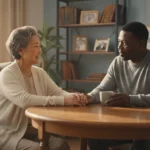

After losing a spouse, you don’t just lose a partner; you lose a part of your own identity. For years, you were a “we,” a team that faced the world together. Now, you’re faced with the daunting task of figuring out who you are as an “I.” This transition can feel incredibly lonely and disorienting, as daily routines and social circles shift. The path to rediscovering yourself while honoring the love and memories you shared is a central part of the healing process. For any grieving spouse, this journey is unique. This article offers support and guidance for finding your footing and building a new life.
For some older adults, grief shows up less as tears and more as a sense of feeling blank, detached, or disconnected. Our guide to emotional numbness in elderly adults after loss explains why this can happen and how counseling can help.
Losing a spouse is one of the most painful and life-changing experiences anyone can go through. You’ve shared your whole life with someone, and all of a sudden, you have to go on without them. This can affect every moment of your day and can cause a whole range of emotions that can change day to day and sometimes minute by minute. Most commonly people facing sudden grief can feel lost, confused, angry, depressed and/ or numb. Mourning isn’t a simple process. You may feel fine one day and feel devastated the next. Over time, though, the sadness should lessen and lessen. You won’t forget about your spouse, but you’ll find it easier to go about your day without constantly feeling the weight of the grief. Reaching this point takes time and patience, but if you commit yourself to the healing process, you can get through this devastating loss.
The Reality of Grief: What to Expect Physically and Emotionally
Grief is more than just sadness; it’s a full-body experience that can impact you in ways you might not expect. When you lose a spouse, the emotional stress can manifest physically, creating a profound sense of exhaustion and unease. It’s common to feel like you’re in a fog, disconnected from the world around you. This is your body’s natural response to trauma. The intense emotional pain of loss triggers a stress response that can affect your sleep, appetite, and even your immune system. You might find yourself getting sick more often or feeling aches and pains that have no clear cause. It’s important to recognize that these physical symptoms are a real and valid part of the grieving process. Acknowledging them is the first step toward giving yourself the care and patience you need to heal. Understanding that your mind and body are deeply connected can help you be more compassionate with yourself during this incredibly difficult time.
How Grief Affects Your Body
The emotional weight of losing a partner often shows up in physical ways. According to HelpGuide, the stress from grief can lead to tangible health problems like stomach pains, headaches, or difficulty sleeping. You might feel completely drained of energy or notice changes in your appetite. These aren’t just in your head; they are physiological reactions to deep emotional distress. Your body is processing the loss just as much as your mind is. If you’re struggling with these physical symptoms, it can be helpful to talk to someone. Learning new methods for stress management can provide relief and support your body’s healing process.
The Emotional Roller Coaster of Grieving
Grief doesn’t follow a straight line. One moment you might feel numb, and the next, you could be overwhelmed by a wave of sadness or anger. It’s normal to experience a wide spectrum of feelings, including confusion, guilt, and even relief. As VITAS Healthcare notes, these sudden waves of pain are part of the journey, and learning from these feelings helps you heal. There is no “right” way to feel. Allowing yourself to experience these emotions without judgment is a crucial part of mourning. Over time, these intense feelings will soften, but giving yourself permission to feel them now is what allows healing to begin.
Common Myths About Grief
Many people hold misconceptions about grief that can make the process even harder. One of the biggest myths is that you should be “over it” by a certain time. The truth is, there is no timeline for grief. As HelpGuide emphasizes, everyone experiences loss differently, and you can’t rush healing. Another myth is that you need to be strong and hide your tears. Crying is a natural and healthy release. Don’t let anyone tell you how you should or shouldn’t grieve. Your journey is your own, and finding support that honors your unique experience with grief and loss is essential.
Navigating a New Identity and Social Connections
When your spouse passes away, you lose more than a person; you lose a part of your identity. For years, you were part of a pair, a “we.” Now, you’re faced with figuring out who you are as an “I.” This transition can be disorienting and lonely. Your social life may also change dramatically. Friends who knew you as a couple might not know how to interact with you now, and invitations may dwindle. Some people may avoid you because they don’t know what to say, while others might offer well-meaning but unhelpful advice. It’s a time of profound adjustment, not just internally but in all your relationships. Learning to set boundaries, communicate your needs, and slowly rebuild your social world are key steps in creating a new life for yourself while still honoring the love you shared.
Finding Yourself Again After Losing a Spouse
A significant part of the grieving process involves redefining your identity. When you lose a spouse, you also lose the role you played as their partner. The question, “Who am I now?” can be daunting. This isn’t about forgetting your spouse but about integrating their memory into a new version of yourself. It’s a journey of rediscovery, where you might pick up old hobbies or explore new interests. This process can feel overwhelming, and it’s common to struggle with adjustment disorders as you find your footing. Be patient with yourself as you explore this new chapter.
How Men and Women May Grieve Differently
Society often places different expectations on men and women when it comes to expressing emotion, and this can impact the grieving process. Men are often taught to be stoic and may struggle to talk about their feelings, sometimes isolating themselves as a result. Women, on the other hand, may find themselves in different social dynamics, sometimes feeling excluded by other couples. It’s important to recognize these societal pressures and understand that there is no right or wrong way to grieve, regardless of your gender. The most important thing is finding healthy outlets for your emotions, whether through talking, journaling, or other activities.
Setting Boundaries with Others
After a loss, everyone seems to have an opinion on how you should be feeling or what you should be doing. While often well-intentioned, this can be exhausting. It is perfectly okay to set boundaries. According to VITAS Healthcare, you have the right to express your grief, but you also have the right not to share if you don’t want to. You can say “no” to social invitations or tell people that you’re not ready to talk about it. Protecting your emotional energy is not selfish; it’s a necessary part of healing and an important coping skill to develop.
Understanding Different Types of Grief
Just as every relationship is unique, so is every experience of grief. There isn’t a single, uniform way to mourn, and the circumstances surrounding your spouse’s death can shape your grieving process significantly. Sometimes, grief begins long before a loved one passes, especially after a prolonged illness. In other cases, the pain of loss can feel so persistent that it disrupts your ability to function day after day. There are also situations where your grief might not be fully acknowledged by those around you, leaving you feeling isolated. Understanding the different forms that grief can take—such as anticipatory, complicated, or disenfranchised grief—can help you make sense of your own feelings. Naming your experience can be a powerful step in validating your emotions and finding the right path toward healing.
Anticipatory Grief
For those whose spouse had a long illness, the grieving process often starts before they pass away. This is known as anticipatory grief. As one person shared, some people grieve a lot while their spouse is still alive. You mourn the future you won’t have and the person they were before their illness. This can be an incredibly draining experience, often intertwined with the stress of caregiving. If you’ve been a caregiver, it’s important to acknowledge the toll it took and seek support for potential caregiver burnout, as your own well-being is crucial.
Complicated Grief
While most people find that the intense pain of grief softens over time, some experience what is known as complicated grief. According to HelpGuide, this is when the pain of loss doesn’t improve and gets in the way of you resuming your own life. If you feel stuck in a state of intense mourning months or years later, it may be a sign that you need additional support. Professional therapy can be incredibly effective in these situations. At Blue Moon Senior Counseling, we offer individual teletherapy, and our bereavement counseling is a Medicare Part B covered service, making it accessible for seniors who need help.
Disenfranchised Grief
Disenfranchised grief occurs when your loss is not openly acknowledged or socially supported. HelpGuide defines it as grief you experience when others don’t see your loss as important. This can happen in many situations, such as the loss of a partner in a relationship that wasn’t publicly recognized. This lack of validation can make you feel incredibly alone and can complicate the healing process. Feeling isolated in your grief is a heavy burden, and it’s important to find a safe space to express your feelings without judgment, which can help combat the effects of senior isolation and deep loneliness.
7 Ways to Cope When You’re Grieving a Spouse
1. Give Yourself Grace and Patience
Self-compassion is one of the most important ideas to remember when you’re grieving after the death of a spouse. You might be used to holding yourself to a high standard and handling everything on your own, but you need to go easy on yourself while you grieve. If you can’t fulfill social obligations or keep your home perfectly clean, try not to feel upset with yourself. It takes time to adjust after a loss, and criticizing yourself for your response to your grief is the last thing you need. You also shouldn’t expect yourself to feel any specific emotions or to experience the stages of grief in a particular order. Everyone’s reaction to death and loss is different. You might feel more angry than sad, or you might feel completely numb to your emotions for a while. There is no right or wrong way to grieve, but the best way to respond is to accept your own emotions with kindness.
2. Make Space for All Your Feelings
If you wake up one morning without feeling sad, you shouldn’t force yourself to feel sad because it’s the expected response to death. However, if you are feeling strong emotions, you have to allow yourself to experience them. Let your mind and heart react the way they naturally react, and let yourself simply sit with the feelings. This can be a key step toward healing after losing a spouse. You can’t start to recover until you process the emotions, and feeling and expressing your grief without self-judgment will help to ease the burden.
3. Lean on Your Support System
Older adults sometimes isolate themselves after the death of a spouse. You may withdraw from family and friends because the person who understands you better than anyone is no longer with you. While the company of your other loved ones may not be the same as the companionship of your life partner, you do need a strong support system around you as you try to get through this painful time. Your family and friends may try to offer words of comfort, but not everyone knows what to say to someone who’s grieving. If you don’t want to talk to them about your emotions, you could ask them to simply spend time with you so that you’re not alone. Grief support groups can be a great resource, too, especially if you don’t have a large support network nearby.
Asking for Practical Help
During the grieving process, everyday responsibilities can feel impossible to manage. The energy it takes to cook a meal, go to the grocery store, or even sort through the mail can be completely draining. It’s important to recognize that asking for practical help is not a sign of weakness; it’s a way of preserving your emotional energy for the hard work of healing. Often, friends and family are eager to offer support but don’t know what you need. Giving them specific tasks can be a gift to them as well as to you. Don’t hesitate to ask a neighbor to walk the dog, a friend to pick up prescriptions, or a family member to help with yard work. This kind of assistance allows you to focus on what truly matters: giving yourself the space and time to grieve.
4. Honor Your Own Timeline for Healing
Just like there are no right or wrong emotions to feel after the death of a spouse, there is no clear timeline for your healing. Some people feel ready to return to their usual activities much sooner than others, but you’re not better or worse for healing quickly or for taking your time. Don’t rush yourself as you grieve, and don’t let others rush you. When the time comes to return to your regular routine, you’ll know that you’re ready.
Understanding the Grieving Timeline
One of the first questions many people ask is, “How long will I feel this way?” The truth is, there’s no set schedule for grief. The first year can be especially tough as you experience all the “firsts”—the first birthday, holiday, or anniversary without your partner. You might have a good day followed by a week of feeling overwhelmed, and that’s completely normal. It’s crucial to let go of any pressure, from yourself or others, to “move on” by a certain time. This is your unique path. If you need support while you find your way, bereavement counseling offers a dedicated space to explore your feelings. At Blue Moon Senior Counseling, our individual teletherapy sessions are a Medicare Part B covered service, making support accessible from the comfort of your home.
5. Find Meaningful Ways to Honor Their Memory
Reminiscing on your time with your spouse can be difficult after their death. You don’t have to linger on your memories if they’re causing you pain, but many seniors find that celebrating their memories can be a very meaningful experience. Sharing your memories of your spouse with someone else can be a great way to express yourself and connect with your support system. You and a family member or friend who knew your spouse could share stories with each other to honor their life. Hearing new stories about your spouse from other people can help you keep your heart full of love even as you navigate the pain of loss. You could even create a scrapbook, a journal, or an audio recording of your memories so that you have a permanent reminder of their legacy.
Dealing with Their Belongings
One of the most emotionally charged tasks after losing a spouse is deciding what to do with their belongings. Each item can feel like a direct link to a memory, making the process feel overwhelming. It’s crucial to remember that there is no correct timeline for this. You should only begin when you feel ready, and it’s perfectly okay to take your time. Don’t let anyone pressure you into making decisions before you’re prepared. This journey is yours alone, and honoring your own pace is a form of self-care. If the thought of this task feels paralyzing, remember that professional bereavement counseling can provide the strength to face such challenges. When you do feel ready, sorting through these items can transform into a meaningful way to honor their memory, allowing you to reflect on the life you shared and decide which keepsakes you want to hold onto.
6. Open Yourself to New Friendships
While returning to your usual routine and social circle can be very comforting while healing after death, it also may be helpful to look for new friendships. Losing a spouse can feel like losing a best friend, and you may feel a need for more social interaction. Expanding your social circle can offer you a respite from your grief, and it can provide a chance to create your new normal after your loss. Look for opportunities around your community to meet other seniors. Your local senior center may offer classes or clubs, or you could volunteer for a charity to meet new people while helping your community. Don’t expect yourself to feel ready to socialize right away, but when you’re ready, allow yourself to seek out friendships so that you reduce your risk of loneliness and isolation.
7. Plan for “Grief Triggers” Like Anniversaries and Holidays
Certain dates on the calendar, like birthdays, anniversaries, and holidays, can feel like emotional landmines after losing your spouse. These are often called “grief triggers,” and it’s completely normal for them to bring back a flood of intense feelings. Instead of letting these days catch you by surprise, it can be helpful to plan for them. Give yourself permission to feel whatever comes up—sadness, anger, or even moments of peace. You don’t have to pretend you’re okay, and you also don’t have to force yourself to be sad. Decide ahead of time how you want to spend the day. Maybe you want to be surrounded by family, or perhaps you’d prefer quiet time alone to reflect. It’s also okay to create new traditions that honor your spouse in a way that feels right for you now. If you find that these significant dates are especially overwhelming, talking with a professional can help you develop strategies to get through them. At Blue Moon Senior Counseling, we offer bereavement counseling through individual teletherapy sessions, which is a Medicare Part B covered service, to support you through these difficult moments.
7. Consider Talking with a Professional
Intense emotions after the death of a spouse are normal, so grief is not considered a mental health disorder. Talking to a mental health professional can be incredibly valuable when processing a loss, though. This can be especially helpful for seniors who are hesitant to open up and talk about their emotions with friends or family. If you’re looking for a private and secure place to grieve, counseling may be the answer. Your counseling session is your opportunity to talk through your emotions and come to terms with your loss. Your therapist will help you find safe and healthy ways to navigate the grieving process. As you take steps toward healing, you can use counseling as a chance to better understand yourself and set new life goals as you enter this new stage. The death of a spouse can feel like the end of the world, but you have the strength to carry on. What’s most important as you grieve is to be compassionate with yourself. Take your time, don’t set expectations, and let yourself feel whatever you feel. Your life may never be exactly the same, but you will continue to find meaning and purpose after your loss. Blue Moon Senior Counseling offers therapy for older adults who are facing grief, loss, and other challenging life experiences. If you’re interested in counseling for seniors, you can contact us today.
Frequently Asked Questions
How long is this supposed to last? I feel like I should be further along in my healing. There is no schedule for grief. The idea that you should be “over it” by a certain time is a myth that can add unnecessary pressure to an already difficult experience. Healing is not a straight line; some days will feel lighter, and others will be heavy. The first year is often the hardest as you face holidays, birthdays, and anniversaries for the first time alone. Be patient with yourself and allow your healing to unfold at its own pace.
Is it normal for grief to affect my physical health? I feel so tired and run down. Yes, it is completely normal. Grief is a full-body experience, and the intense emotional stress of losing a spouse can show up in physical ways. You might experience everything from exhaustion and sleeplessness to headaches and changes in your appetite. This is your body’s natural response to trauma. Acknowledging that these physical symptoms are a real part of your grieving process is an important step in giving yourself the care you need.
What if I feel like I’m not getting any better? While grief has no timeline, if you feel that the intense, overwhelming pain isn’t softening over time and it’s getting in the way of your ability to function, you might be experiencing complicated grief. This is when you feel stuck in that acute state of loss for a prolonged period. If this sounds familiar, talking with a professional can provide significant support. Blue Moon Senior Counseling offers individual teletherapy, and our bereavement counseling is a Medicare Part B covered service.
How can I possibly get through holidays and anniversaries without my spouse? Those significant dates can feel incredibly daunting. Instead of letting them catch you off guard, it can help to make a plan. Decide ahead of time how you want to spend the day, whether that means being with family, spending quiet time alone, or creating a new tradition to honor your spouse. Give yourself permission to feel whatever emotions come up without judgment. The goal isn’t to ignore the day but to find a way to move through it that feels right for you.
My friends and family mean well, but they often say the wrong thing. What should I do? It can be exhausting when people offer well-meaning but unhelpful advice. It is perfectly okay to set gentle boundaries to protect your emotional energy. You can communicate your needs directly by saying something like, “I appreciate you checking in, but I’m not ready to talk about it right now.” You can also guide them toward practical help, such as asking a friend to run an errand or just sit with you in comfortable silence. You have the right to grieve in your own way, and you don’t have to perform for anyone.
Key Takeaways
- Acknowledge grief’s total impact: Understand that losing a spouse affects your body and mind, often causing physical symptoms like fatigue and a wide range of unpredictable emotions. Accepting this is a key first step in being compassionate with yourself.
- Give yourself permission to heal on your own terms: There is no correct timeline for grieving, so allow yourself the space to process your loss without pressure. This journey includes rediscovering your identity and setting boundaries to protect your emotional energy.
- Build a support system for your new reality: Lean on friends and family for practical help, find comfort in sharing stories, and consider professional counseling for a dedicated space to heal. Creating new traditions can also be a meaningful way to honor your spouse’s memory.