
A veteran may carry difficult memories quietly for decades, then notice them resurfacing after retirement or a health change. These experiences deserve attention, not dismissal as a normal part of aging.
Elderly veterans PTSD trauma can resurface when age-related changes, isolation, or reminders of combat bring earlier experiences closer to the present. Symptoms may include intrusive thoughts, hypervigilance, depression, or withdrawal. A professional assessment can distinguish PTSD from common aging-related concerns and guide individualized treatment.
Older adults are generally less likely to have PTSD than younger adults, but that does not make late-life symptoms less real or less treatable. The U.S. Department of Veterans Affairs explains that trauma responses may reappear during major life changes. Understanding why this happens can make the symptoms feel less mysterious and help families respond with patience. It also clarifies how treatment can be adapted to a veteran’s health, needs, and preferences.
If you have noticed these changes in a veteran you love, help is available. Request a free consultation or call Blue Moon Senior Counseling at (630) 896-7160 today.
Why PTSD Trauma Responses Resurface in Elderly Veterans
For some veterans, painful memories that remained quiet for years can become more noticeable later in life. This does not mean a person is weak, losing control, or failing to move forward. Trauma responses may resurface as aging brings major changes, including retirement, reduced daily structure, or a sense of lost purpose. The Department of Veterans Affairs notes that these transitions can create space for long-buried experiences to return.
Military service often provides routines, responsibilities, and close relationships. Leaving work or losing familiar roles can change how a veteran spends each day. A spouse, friend, or fellow service member may also die, leaving fewer people who understand the past. When social networks become smaller, there may be less companionship and fewer opportunities to stay connected. This can make memories and emotions feel more present.
Health changes can add another layer. Chronic pain, reduced mobility, hearing or vision loss, and serious illness may limit activities that once helped a veteran feel capable and independent. Medical appointments or physical sensations can also remind someone of earlier danger, injury, or loss. These reactions deserve attention, especially when they begin interfering with sleep, relationships, or daily routines.
Later life often brings reflection. Veterans may revisit decisions, relationships, and experiences from combat or service as they consider what their lives have meant. This reflection can bring pride and gratitude, but it may also bring grief, guilt, anger, or fear. A family member might notice increased irritability, withdrawal, or watchfulness before the veteran identifies the change as trauma-related.
While older adults may be diagnosed with PTSD less often than younger adults, the symptoms they do experience are no less valid and no less treatable. PTSD is different from ordinary worry associated with aging because it includes intrusive memories connected to a traumatic experience. The VA explains that distinguishing these experiences can support appropriate care. Read more about how past trauma can resurface in the later years, or explore support for PTSD in older adults.
What Triggers Trauma Symptoms in Veterans Later in Life
Trauma symptoms can become more noticeable when familiar routines, relationships, or physical abilities change. The trigger may not be a new traumatic event. Often, a present-day reminder connects with an earlier experience and brings distress closer to the surface.
Retirement and the Loss of Structure
Retirement can remove schedules, responsibilities, and daily contact with other people. For some veterans, work provided a sense of purpose and a way to stay focused on the present. Without that structure, there may be more quiet time for difficult memories or worries to return.
Changes in identity can also feel unsettling. A veteran who once felt needed at work, in the military community, or at home may struggle with a different role. The U.S. Department of Veterans Affairs notes that retirement, age-related changes, and loss of purpose can contribute to resurfacing trauma responses. Learn more about aging veterans and PTSD.
Health Problems and Medical Care
Health decline can affect both mood and memory of the past. Chronic conditions, pain, fatigue, or reduced mobility can make daily life harder and may leave a veteran with fewer ways to feel capable or connected. Medical appointments, hospital stays, or physical sensations can also become reminders of earlier danger, injury, or fear.
Research on Vietnam veterans more than 50 years after service found that PTSD and combat exposure were strongly linked to cardiovascular disease and other chronic conditions. With effects that can persist long after service ends. Columbia University’s studies of aging Vietnam veterans illustrate how trauma and physical health can interact across a lifetime. These connections matter because treating the whole person, not just a diagnosis, is part of effective late-life care.
Isolation and Reflection
Smaller social networks can develop as fellow veterans, spouses, and friends pass away. With fewer people who share the same history, a veteran may feel that no one fully understands what they experienced. Loneliness can also reduce the everyday distractions that once helped keep memories at a distance.
Quiet reflection can bring its own intensity. As veterans look back on their lives, they may revisit painful moments from combat or service. Anniversaries, news about war, or conversations with younger generations can make these memories more immediate. Identifying what tends to precede distress can help a veteran and a counselor plan practical coping strategies.
Recognizing Trauma Symptoms in an Aging Veteran
Trauma can affect an aging veteran in ways that are easy to miss, especially when symptoms appear gradually or are explained as part of getting older. Hypervigilance may look like being constantly alert, easily startled, or unable to relax in ordinary settings. Intrusive thoughts and memories can bring unwanted images, emotions, or physical reactions connected to past experiences. Other signs may include depression, irritability, avoidance, social withdrawal, and difficulty feeling safe around other people.
Sleep problems deserve attention as well. An older veteran may struggle to fall asleep, wake frequently, or experience distressing dreams. Poor sleep can then worsen concentration, mood, and physical health. These changes are not simply an unavoidable part of aging. The U.S. Department of Veterans Affairs identifies hypervigilance, intrusive thoughts, depression, and withdrawal among common symptoms in aging veterans. Learn more about PTSD and aging veterans.
Distress may appear as physical symptoms
Older adults do not always describe emotional distress as fear, sadness, or trauma. They may report headaches, muscle tension, stomach discomfort, fatigue, pain, or changes in appetite instead. These symptoms can have medical causes, so a healthcare professional should evaluate them. At the same time, physical complaints can occur alongside trauma symptoms and deserve compassionate questions about mood, memories, sleep, and safety.
Silence can hide a need for help
Some veterans remain silent because they learned to endure hardship without discussing it. Stigma, military stoicism, concern about burdening family, or uncertainty about whether treatment could help may all reduce disclosure. A calm, respectful conversation can make it easier to share what is happening. Family members can ask open questions without demanding details about combat or other traumatic events.
PTSD symptoms involve intrusive memories related to traumatic experiences, which distinguishes them from ordinary worry about aging. A fuller overview is available in our guide to signs of PTSD in seniors. With appropriate assessment and individualized care, these symptoms can be treated. Seeking support is not a sign of weakness, and relief does not require forgetting or minimizing a veteran’s service.
You do not have to figure this out alone. Start a conversation with a counselor who understands late-life trauma, or call (630) 896-7160.
Treatment Options: VA Care vs Medicare-Covered Teletherapy
Older veterans have more than one path to support for trauma symptoms. The right choice depends on eligibility, location, health needs, comfort with care, and how quickly support is needed. VA care and Medicare-covered individual teletherapy can both be respectful, clinically appropriate options. For veterans and families new to this topic, our overview of PTSD in older adults explains how trauma care fits into senior counseling.
| Option. | Who it serves. | Coverage. | Delivery. | Best for. |
|---|---|---|---|---|
| VA care. | Veterans who qualify for and enroll in VA health care. | Often available at little or no cost for eligible veterans, depending on enrollment and eligibility. | VA medical centers, community clinics, and available remote services. | Veterans who want coordinated care through the VA health system. |
| Medicare-covered individual teletherapy. | Seniors with traditional Medicare or a Medicare Advantage PPO, without VA enrollment. | Medicare Part B covered service, subject to plan rules and provider eligibility. | Individual teletherapy by phone or video from home. | Veterans who prefer accessible care, face travel barriers, or want an option outside the VA system. |
What both options should include
Effective treatment should begin with a thoughtful assessment of trauma history, current symptoms, medical conditions, medications, sleep, and daily functioning. Psychotherapies for late-life PTSD appear safe, acceptable, and effective for cognitively intact older adults. Research on PTSD treatment in later life supports care that respects the veteran’s history while focusing on present needs.
Why individualized adaptation matters
Aging can bring chronic illness, pain, hearing or vision changes, mobility limits, and cognitive changes. Treatment may need adjustments for these concerns rather than treating PTSD in isolation. Trauma-informed care and cognitive behavioral therapy can be adapted for older veterans, and providers should plan around the veteran’s communication needs, medical history, and goals.
Care decisions are personal. Some veterans prefer the structure of the VA system, while others value the flexibility of speaking with a counselor from home. A provider can help clarify which option best fits the veteran’s health, coverage, and comfort.
How Individual Teletherapy Helps Veterans with Late-Life Trauma
Individual teletherapy can make trauma care more accessible for veterans who find travel, unfamiliar settings, or busy clinics stressful. Blue Moon Senior Counseling provides individual teletherapy by phone or video, allowing older adults to meet with a counselor from home. This approach supports consistent care while respecting each veteran’s routines, comfort, and preferences.
A familiar setting can make conversations easier
Phone or video sessions remove the need to drive, arrange transportation, or navigate a new building. A veteran can speak from a familiar room and keep helpful routines nearby. That setting may feel less disruptive when trauma symptoms include withdrawal, depression, or heightened alertness.
Telehealth can also help when pain, fatigue, mobility limits, or health concerns make travel difficult. Blue Moon’s telehealth services are designed for counseling access through phone or video. The goal is not to force a veteran into one format. The counselor and patient can identify the option that feels most workable.
Care can honor military history and later-life concerns
Trauma-informed care begins with respect, careful listening, and attention to what the veteran wants to discuss. Late-life trauma may become more noticeable after retirement, changes in health, or other shifts in daily life. A counselor can explore these experiences without assuming that every veteran responds to combat memories in the same way.
Trauma-informed care and cognitive behavioral therapy can be adapted for older veterans with PTSD. Research indicates that psychotherapy for late-life PTSD can be safe, acceptable, and effective for cognitively intact older adults (National Center for Biotechnology Information). Treatment remains individualized rather than based on a fixed script.
Sessions can account for physical and cognitive needs
Aging can bring hearing changes, vision concerns, chronic illness, pain, or cognitive changes. These factors may affect how a veteran communicates and participates in therapy. Effective care can adjust the pace, explanations, session format, and therapeutic goals when needed.
For eligible patients, individual teletherapy through Blue Moon is a Medicare Part B covered service. A consultation can help clarify whether phone or video counseling fits the veteran’s needs and what next steps may be appropriate.
How Families Can Support an Elderly Veteran with Trauma
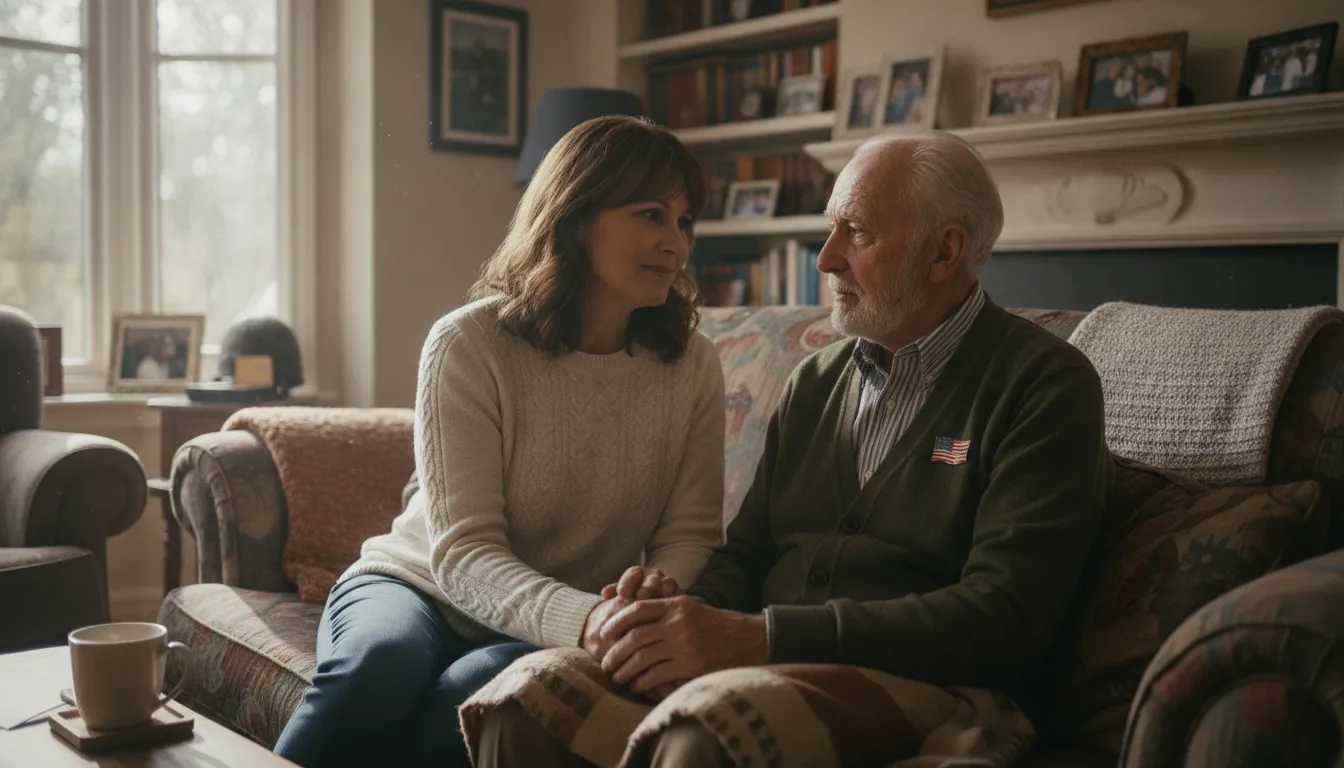
Supporting a veteran who may be carrying unresolved trauma can be difficult for the whole family. You may notice changes in sleep, mood, trust, or social contact without knowing what is causing them. Your role is not to diagnose PTSD. It is to offer steady support and help your loved one find appropriate care.
Start with respect and choice
Choose a calm, private moment rather than raising the subject during an argument or visible distress. You might say, “I have noticed you seem more on edge lately. I care about you, and I am here if you want to talk.” Avoid pressing for combat details. Ask what kind of support would feel comfortable, then listen without correcting, judging, or treating the veteran as fragile.
Reluctance does not mean your concern is misplaced. Some veterans have learned to manage painful memories privately, while others may fear stigma or losing independence. A respectful conversation can remain brief. Let them know they can return to it later.
Notice changes without labeling them
Families can watch for patterns in everyday life, including:
- Increased alertness or an easy startle response in familiar settings.
- Intrusive thoughts, distressing memories, or difficulty letting go of the past.
- Low mood, irritability, or withdrawing from people and activities they once enjoyed.
- Poor sleep, nightmares, or waking frequently during the night.
- Avoiding places, conversations, or reminders of military service.
These signs can have several causes, including medical conditions, medication effects, grief, or trauma. These signs can have several causes, including medical conditions, medication effects, grief, or trauma. Intrusive memories connected to past traumatic experiences may be especially important to mention to a clinician, but observations alone cannot establish a diagnosis.
Keep notes about when changes began, what seems to worsen them, and how they affect sleep, relationships, or daily activities. Share this information only with the veteran’s permission, unless there is an immediate safety concern. This approach helps protect dignity while giving a professional useful context.
Encourage an age-aware assessment
Assessment for trauma history and PTSD symptoms can improve recognition and treatment in older adults. Assessment should also account for how distress may be expressed differently later in life, including through physical complaints or withdrawal. A clinician can consider health history, pain, sensory changes, memory concerns, grief, and current stressors alongside trauma symptoms.
Offer practical help in small, concrete steps:
- Help find a provider who specializes in care for older adults.
- Arrange transportation or help set up a phone or video appointment if travel is hard.
- Offer to join the first visit if the veteran would like support.
- Keep a gentle, consistent presence so the veteran knows the door stays open.
Blue Moon’s elderly veteran PTSD help resource may be a useful starting point. If grief or loss is part of the picture, grief and loss counseling may also be relevant. Progress may take time, and patient, non-pressuring support can make seeking help feel safer.
Steady, compassionate support can make a meaningful difference. Reach Blue Moon Senior Counseling at (630) 896-7160 or request a free consultation to explore next steps.
Frequently Asked Questions
Can PTSD resurface in elderly veterans later in life?
Yes. Trauma responses can return or become more noticeable after retirement, age-related changes, or a loss of purpose changes daily life. A quieter routine may also leave more room for painful memories. Resurfacing symptoms do not mean a veteran is weak or failing. They indicate that support may be needed. The U.S. Department of Veterans Affairs explains how PTSD can affect aging veterans.
What triggers PTSD symptoms in older veterans?
Common triggers include declining health, isolation, major changes in independence, and reflection on combat experiences. Medical visits, sleep disruption, anniversaries, or news about war may also bring distressing memories closer to the surface. Identifying patterns can help a veteran and clinician plan practical coping strategies.
How can families tell PTSD symptoms apart from normal aging anxiety?
Some worry, sleep changes, or irritability can occur with aging, but PTSD includes intrusive memories or reactions connected to a traumatic experience. Other possible signs include hypervigilance, depression, withdrawal, and persistent distress. A clinician should assess new or worsening symptoms rather than assuming they are an unavoidable part of aging. VA guidance on PTSD in older veterans describes these differences.
Can PTSD therapy be adapted for an older veteran’s health needs?
Yes. Trauma-informed care, cognitive behavioral therapy, and other psychotherapies may be adapted for physical limitations, chronic illness, pain, sensory changes, or cognitive concerns. Treatment planning should account for the veteran’s comfort, communication needs, medical history, and goals. Research indicates that psychotherapy can be safe, acceptable, and effective for cognitively intact older adults. A review of PTSD treatment in later life supports individualized adaptation.
Ready to Schedule Support?
Speaking with a qualified counselor can help an older veteran make sense of distressing memories, changes in mood, or other trauma-related concerns in a respectful setting. Care is individualized and designed to meet each person’s needs. To schedule a free consultation, call Blue Moon Senior Counseling at (630) 896-7160. A brief conversation can help you decide whether individual teletherapy by phone or video is a suitable next step.