
A disability can change how an older adult moves through the day, connects with other people, and sees the future. A new mobility limitation, vision or hearing change, or loss of physical independence may bring grief, frustration, anxiety, or isolation. Families often want to help but are unsure what to say or when counseling could make a difference.
Mental health support for seniors after disability starts with recognizing the whole person, not only the diagnosis or limitation. Practical changes, steady social connection, and coping with illness counseling can help an older adult adjust while preserving dignity and choice.
Call (630) 896-7160 to schedule a consultation about support after disability.
What does mental health support for seniors after disability involve?
Support is not one service or one conversation. It is a plan that responds to the senior’s emotional needs, daily circumstances, relationships, and goals. Depending on the situation, helpful support may include:
- Space to grieve: A senior may need to talk about lost abilities, changed roles, or activities that are no longer easy or safe.
- Help naming emotions: Anxiety, sadness, anger, embarrassment, and fear can be difficult to explain, especially when an older adult does not want to worry family members.
- Small, realistic routines: A predictable sleep schedule, meaningful activity, and manageable social contact can support a sense of structure.
- Coordination with the care team: With the senior’s permission, family members can share relevant concerns with primary care, rehabilitation professionals, or other providers.
- Individual counseling: A counselor can help the senior process the change, practice coping skills, communicate needs, and identify next steps that fit current abilities.
The goal is not to pressure a senior to feel positive about a difficult change. The goal is to make room for honest feelings while finding safe and meaningful ways to move forward.
| Support option | How it may help | What to keep in mind |
|---|---|---|
| Individual teletherapy | Provides private space to process grief, anxiety, isolation, and changing roles by phone or video. | Choose a format and pace that fit the senior’s comfort, accessibility needs, and privacy. |
| Primary care | Reviews mood changes and possible medical, medication-related, sleep, or pain contributors. | Share persistent or worsening symptoms and ask what follow-up is appropriate. |
| Rehabilitation and daily-living support | Helps address functional goals, safety, communication, mobility, or adapting activities. | Emotional adjustment and functional recovery can be supported at the same time. |
| Urgent or crisis support | Responds to immediate danger, suicidal thoughts, or a severe emotional crisis. | Call 911 for immediate danger or call/text 988 for urgent emotional crisis support. |
Why can disability affect an older adult’s mental health?
Disability can affect much more than physical functioning. It may change transportation, household responsibilities, finances, privacy, hobbies, or the ability to care for someone else. A person who once drove, worked, volunteered, or managed every task independently may suddenly need assistance. Even when the support is necessary, the change can feel like a loss of control.
Some seniors also experience a smaller social world after a disability. Pain, fatigue, inaccessible transportation, communication barriers, or fear of falling can make it harder to attend events or visit friends. Reduced contact can increase loneliness, while loneliness can make it harder to ask for help. Blue Moon’s phone counseling information for seniors can be another starting point for families considering an accessible format.
These reactions do not mean that every senior with a disability has a mental health condition. They do mean that emotional well-being deserves attention alongside physical recovery. The CDC’s overview of mental health and disability explains why mental health belongs in a broader disability-support plan. Persistent changes in mood, interest, sleep, appetite, energy, or thinking should be discussed with a health professional while the family arranges appropriate care.
How can families support a senior after a disability?
Family support works best when it combines practical help with respect for autonomy. Before taking over a task, ask what kind of help the senior wants. A senior may need transportation or meal assistance but still want to choose the schedule, speak for themselves at appointments, or decide which activities remain important.
Listen before offering solutions
Try questions such as, “What has been hardest this week?” or “What would make today a little easier?” Avoid immediately comparing the senior’s experience with someone else’s or insisting that they focus on the positive. Listening does not make the disability worse; it helps the senior feel seen.
Look for changes that persist
Watch for ongoing withdrawal, hopelessness, irritability, loss of interest, major sleep or appetite changes, difficulty concentrating, or statements that life is not worth living. These signs can have medical, medication-related, or emotional causes, so a clinician should evaluate them rather than the family trying to diagnose the problem alone.
Protect connection and choice
Offer accessible ways to stay connected, such as a short phone call, a visit at a comfortable time, a familiar hobby adapted to current abilities, or a community activity with transportation support. Present options instead of issuing demands. When a senior can make decisions about the support plan, participation is more likely to feel collaborative.
If the disability is related to illness or a long recovery, Blue Moon’s coping with illness counseling guidance may help families understand how individual teletherapy can support adjustment. Counseling does not replace medical, rehabilitation, or emergency care. It can provide a separate place to work through the emotional impact.
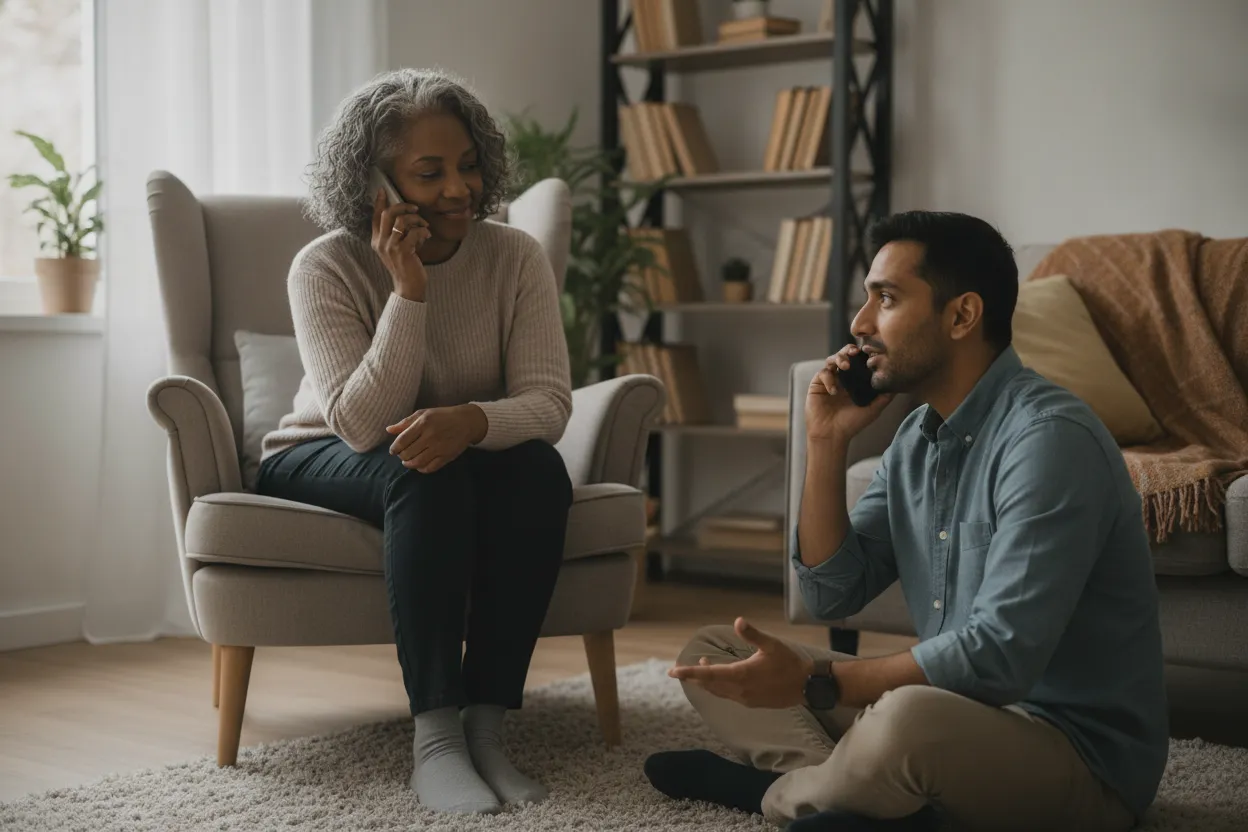
Call (630) 896-7160 to talk with Blue Moon Senior Counseling about individual teletherapy.
When should a senior consider counseling after a disability?
A senior does not have to wait for a crisis or a formal diagnosis before asking about counseling. A consultation may be useful when the senior is struggling to adjust, feels persistently alone, is avoiding activities that once mattered, or finds worry and sadness interfering with daily life.
Counseling can be especially worth exploring when:
- the senior says the disability has changed their identity or purpose;
- family conversations repeatedly become tense or unproductive;
- fear, embarrassment, or low confidence is limiting safe participation;
- the senior is grieving a role, routine, relationship, or ability;
- caregiving stress is affecting both the senior and family members; or
- the senior wants help adapting but does not know where to begin.
Individual teletherapy by phone or video may be a practical option for seniors who have difficulty traveling. The format should be selected based on the senior’s comfort, hearing or vision needs, privacy, technology access, and clinical situation. Blue Moon provides individual teletherapy for older adults but does not provide emergency or crisis care. Families can learn more about the practice through the Blue Moon Senior Counseling overview.
What can a senior discuss in individual counseling?
The senior sets the pace and chooses what to address. A counseling conversation may include:
- grief about abilities or activities that have changed;
- fear of dependence, falling, or becoming a burden;
- anxiety about appointments, transportation, or the future;
- loneliness and ways to rebuild safe social contact;
- communication with family members and caregivers;
- coping with pain, fatigue, or a long recovery; and
- values and goals that can guide the next stage of adjustment.
A counselor may help the senior identify manageable steps, notice unhelpful thought patterns, practice communication, and reconnect with meaningful activities. The work should remain individualized. A strategy that fits one senior may not fit another, and the senior’s medical and functional needs should remain part of the broader care plan.
How can families prepare for a counseling consultation?
Preparation can make the first conversation less tiring. Ask the senior what they hope will improve and whether they want a family member involved. Write down recent changes in mood, sleep, appetite, activity, or social contact, along with questions about phone or video sessions.
It can also help to discuss practical details:
- What time of day is the senior most comfortable and alert?
- Would a phone session be easier than video, or would visual connection be reassuring?
- Is there a private place where the senior can speak freely?
- What communication or accessibility accommodations may be needed?
- What does the health plan say about outpatient mental health care?
For Medicare questions, start with the plan rather than assuming every service is covered in the same way. Medicare’s outpatient mental health coverage information describes covered services and cost considerations. Blue Moon describes its offering as a Medicare Part B covered service for eligible patients with traditional Medicare or Medicare Advantage PPO coverage. HMOs do not cover our service. Confirm eligibility, network, and cost details before scheduling.
What if the senior refuses mental health support?
Refusal may reflect stigma, fear, fatigue, privacy concerns, or a belief that counseling will not help. Families can keep the conversation respectful and specific. Instead of saying, “You need therapy,” try, “Would you be open to one conversation about how this change has affected you?” Explain that counseling is not a judgment and that the senior can ask questions before deciding.
Do not threaten, shame, or arrange non-emergency counseling without the senior’s knowledge when they have the capacity to make their own decisions. Continue offering practical help and connection. If the senior’s safety, decision-making capacity, or medical condition is in question, involve the appropriate health professionals.
What should families do in an emotional crisis?
Blue Moon is not an emergency service. If someone is in immediate danger, call 911 or go to the nearest emergency department. If a senior is having suicidal thoughts or experiencing an urgent emotional crisis, call or text 988 to reach the Suicide & Crisis Lifeline, or use the 988 Lifeline. Stay with the person when it is safe to do so and follow the crisis responder’s guidance.
For non-emergency adjustment, grief, anxiety, or isolation concerns, a family member or senior can contact Blue Moon Senior Counseling or review the senior counseling referral form to ask about individual teletherapy. Support after disability can begin with one honest conversation and one manageable next step.
Call (630) 896-7160 to schedule a consultation for individual senior counseling.
Frequently asked questions
Is sadness after a disability normal for an older adult?
Sadness, frustration, and grief can be understandable responses to a major life change. They should not be dismissed as inevitable or left unsupported when they persist, worsen, or interfere with daily life. A healthcare professional can help assess possible medical and emotional contributors.
Can counseling help if the disability is permanent?
Yes. Counseling cannot reverse a disability, but it can help a senior process loss, adapt expectations, communicate needs, manage anxiety, and identify meaningful goals that fit current circumstances.
Can a family member join a senior’s counseling session?
That depends on the senior’s wishes, privacy, and the counselor’s clinical judgment. Ask the senior and provider ahead of time. The senior should remain at the center of decisions about their care.
What is the first step if a senior is not sure counseling is needed?
Start with a consultation or a conversation with the senior’s healthcare professional. The senior can describe what has changed and ask what type of support may fit. For Blue Moon, call (630) 896-7160 or use the contact page to ask about individual teletherapy.