
Long COVID mental health in older adults is shaped by more than changes in energy or physical comfort. Ongoing fatigue, sleep problems, difficulty concentrating, anxiety, low mood, and reduced social connection can affect how a person sees daily life. This guide explains the emotional side of Long COVID and practical ways older adults and families can seek support.
Call Blue Moon Senior Counseling at (630) 896-7160
How can Long COVID affect mental health in older adults?
Long COVID may affect mental health through a combination of changing symptoms, disrupted routines, uncertainty, isolation, and loss of independence. Older adults may feel anxious, discouraged, irritable, lonely, or overwhelmed. These reactions deserve attention, but they do not by themselves confirm a mental health diagnosis or prove that every symptom is caused by Long COVID.
The Centers for Disease Control and Prevention lists depression and anxiety among reported Long COVID symptoms, along with fatigue, sleep problems, and difficulty thinking or concentrating. Mental and physical health also influence each other, so emotional distress can make it harder to manage appointments, routines, and relationships. Read the CDC overview of Long COVID signs and symptoms and discuss persistent or concerning symptoms with a healthcare professional.
Emotional changes may be connected to daily disruption
An older adult who once cooked, drove, exercised, volunteered, or visited friends may no longer have the same stamina. When ordinary tasks require more planning or rest, frustration can build. A person may also worry about becoming a burden or losing the role they held in the family.
These changes are not a character flaw. They are a reason to adjust expectations and add support. A slower pace, fewer activities, and more help with practical tasks may be appropriate while the medical picture becomes clearer.
Uncertainty can intensify worry
Long COVID symptoms may change over time. The CDC notes that symptoms can emerge, persist, resolve, reemerge, or change in severity. The CDC also says there is no single laboratory test that determines whether symptoms are due to COVID-19. That uncertainty can leave an older adult feeling dismissed, frightened, or unsure about what to report.
A symptom journal can help organize questions for a healthcare visit. It may include the date, symptom, severity, activity beforehand, sleep, medications, and what helped or worsened the experience. The journal is not a diagnosis. It is a communication tool.
Which mental-health challenges can accompany Long COVID?
Long COVID does not affect everyone in the same way. Emotional challenges can overlap, and one difficulty may reinforce another. The goal is not to label every reaction. The goal is to notice changes, reduce avoidable strain, and connect the older adult with appropriate care.
| Challenge | What it may look like | Supportive response |
|---|---|---|
| Anxiety or fear. | Worry about symptoms, reinfection, appointments, or the future. | Use calm, specific plans and bring unanswered questions to a medical provider. |
| Low mood. | Less interest in familiar activities, hopeless-sounding comments, or tearfulness. | Ask directly about mood and connect with a healthcare or mental-health professional. |
| Isolation. | Fewer calls, visits, outings, or conversations because activity feels exhausting. | Offer shorter, lower-effort contact that respects the person’s energy. |
| Brain fog and frustration. | Difficulty focusing, remembering details, or following a long conversation. | Share one point at a time and use written reminders with permission. |
| Grief and identity change. | Sadness about lost abilities, routines, roles, or independence. | Acknowledge the loss without rushing the person to feel positive. |
These signs can also occur with medication effects, sleep disruption, depression, anxiety disorders, other medical conditions, or ordinary stress. A healthcare provider can help evaluate new, persistent, or worsening symptoms. Blue Moon Senior Counseling can provide counseling for coping with illness, but counseling does not replace medical evaluation or treatment.
Why can Long COVID feel especially difficult for an older adult?
Older adults often bring existing health conditions, medication schedules, mobility changes, or previous losses to a Long COVID experience. These factors do not mean an older adult will have a particular outcome. They can, however, make a new period of uncertainty harder to manage without coordinated support.
The World Health Organization identifies older age, pre-existing health problems, severe COVID-19 illness, and repeated infections among factors associated with higher risk of post-COVID condition. WHO also describes effects on daily activities and social participation. Review WHO information about post-COVID condition for a broader medical overview.
Loss of independence can affect self-worth
Needing help with shopping, transportation, bathing, meals, or communication can feel uncomfortable. Some older adults minimize symptoms because they want to remain independent. Others may become angry when family members offer help in ways that feel controlling.
Support works better when it protects choice. Ask, “What would make today easier?” instead of assuming what the person needs. Offer two realistic options, such as a shorter visit or a phone call, rather than presenting an open-ended list of options.
Social contact may require more planning
When fatigue or post-exertional worsening limits activity, an older adult may need to plan rest before and after social contact. A visit that once lasted two hours may need to become a twenty-minute conversation. A caregiver can help by making this change feel normal rather than treating it as a failure.
Small, consistent contact can be meaningful. Consider a quiet visit, a brief phone call, a shared photo, or a short conversation at the time of day when the older adult has the most energy. Follow the older adult’s lead and avoid treating social contact as another obligation.
What emotional support can help an older adult with Long COVID?
Helpful support is practical, respectful, and paced around the older adult’s available energy. It does not require a family member to solve Long COVID. It creates safer ways to communicate, notice changes, and connect the person with medical and mental-health care.
1. Listen without debating the symptoms
You can say that the experience sounds exhausting. Tell the person you believe it has been difficult. Avoid arguing about whether a symptom is real, comparing the person with someone else, or promising that recovery will happen by a specific date. Validation is not the same as making a medical judgment.
2. Make communication easier
Brain fog and fatigue can make long conversations difficult. Ask permission before offering advice. Use short questions, pause for answers, and write down agreed next steps. If an appointment is coming up, help the older adult prepare a short list of changes and questions.
3. Protect rest and pacing
A crowded schedule can increase physical and emotional strain. Work with the older adult and healthcare team to identify what activities are realistic. Build in breaks, simplify meals, and avoid treating a low-energy day as a lack of motivation.
4. Keep a small connection routine
Choose one manageable form of connection, such as a ten-minute call, a quiet visit, or a shared television program. The routine can change when symptoms change. The purpose is dependable connection, not forcing the older adult to be more active than feels safe.
5. Invite professional support
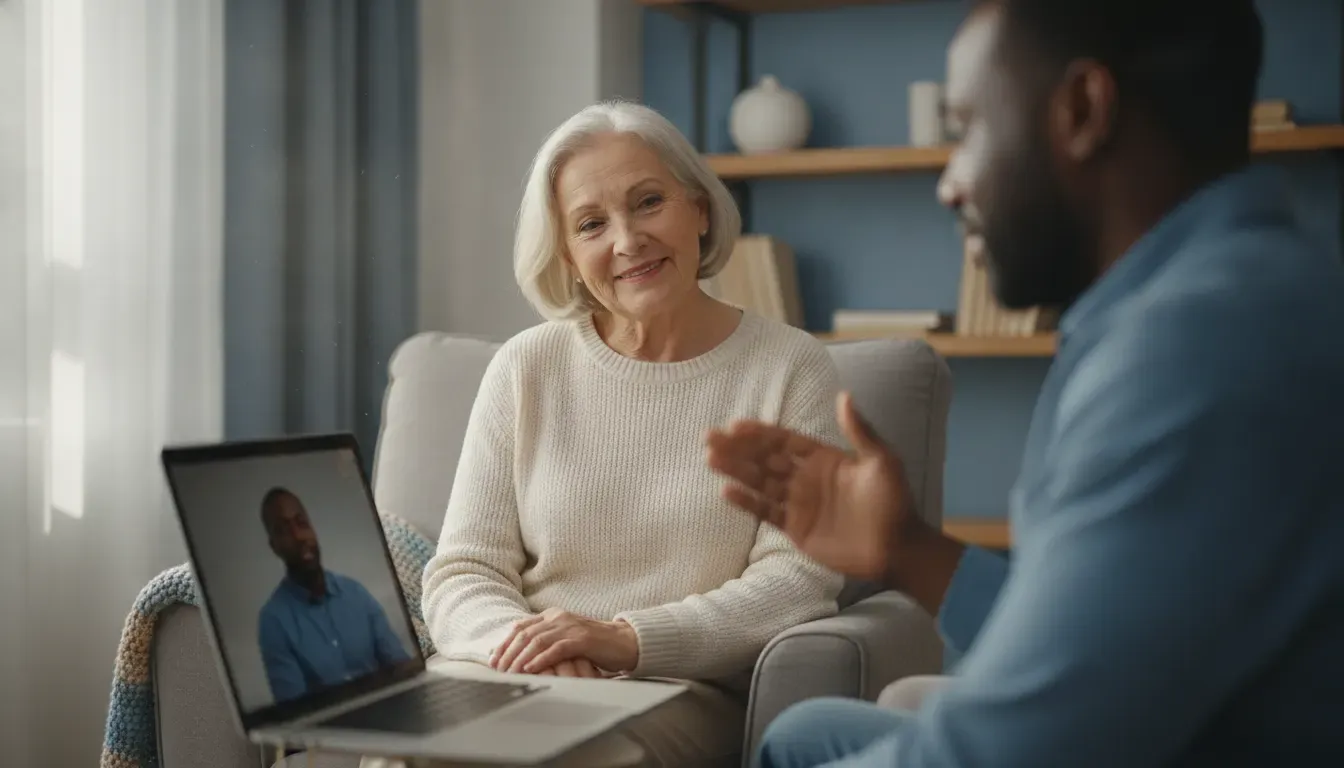
Ask whether the older adult would like help speaking with a healthcare provider, counselor, or another trusted professional. Counseling may help with grief, anxiety, isolation, communication, and adjustment while medical providers address physical symptoms. Blue Moon primarily offers individual teletherapy by phone or video, not group therapy or emergency care.
Call Blue Moon Senior Counseling at (630) 896-7160
When should an older adult seek medical or counseling support?
Seek medical guidance for persistent, new, worsening, or unexplained physical or emotional symptoms after COVID-19. A provider can review the history, medications, other health conditions, and changes in daily function. The CDC recommends talking with a healthcare provider when Long COVID symptoms are suspected.
Consider counseling when emotional distress, grief, anxiety, low mood, or isolation is interfering with relationships, self-care, sleep, appointments, or daily decisions. Counseling can complement medical care by giving the older adult space to process changes and practice coping strategies. It does not diagnose Long COVID, prescribe medication, or replace a medical treatment plan.
Questions to bring to a healthcare visit
- What symptoms changed after the COVID-19 infection, and when did the changes begin?
- Which symptoms interfere most with daily activities or social connection?
- What medications, sleep changes, or existing conditions should be reviewed?
- What warning signs should prompt a call or urgent evaluation?
- Would a referral to behavioral health, rehabilitation, or another specialist be helpful?
If travel or physical stamina is a barrier, ask the healthcare provider what remote options are appropriate. Blue Moon’s senior counseling services are designed around accessible phone or video individual teletherapy when the service is a suitable fit.
How can caregivers support mental health without taking over?
Caregivers can support an older adult’s mental health by combining concern with respect for autonomy. Ask what kind of help is wanted, agree on one next step, and revisit the plan when symptoms change. Avoid speaking for the older adult when they can speak for themselves, and avoid making every conversation about symptoms.
- Ask before acting: Would you like me to listen, help plan, or help contact your provider?
- Use neutral observations: “I have noticed you are sleeping more and skipping calls.”
- Keep choices manageable: offer one or two options rather than a long list.
- Respect privacy: ask what may be shared with relatives or clinicians.
- Watch your own limits: caregivers may also need support, rest, and clear boundaries.
For older adults who are becoming isolated, Blue Moon’s resource on senior isolation and deep loneliness may offer another starting point. A family member can also learn more about depression in older adults, while remembering that online information cannot diagnose a loved one.
What if an older adult is in immediate emotional danger?
Long COVID-related distress should be taken seriously, especially when an older adult talks about dying, self-harm, or being unable to stay safe. If there is immediate danger, call 911 or go to the nearest emergency department. For urgent emotional crisis support in the United States, call or text 988 or use the 988 Suicide and Crisis Lifeline, which offers free, confidential support 24/7/365.
Blue Moon Senior Counseling is not an emergency service. Individual teletherapy may be appropriate for non-emergency follow-up after immediate safety needs have been addressed and when a qualified healthcare professional determines it is a suitable option.
Call Blue Moon Senior Counseling at (630) 896-7160
Frequently asked questions
Can Long COVID affect an older adult’s mood?
It can be associated with emotional and mental-health challenges, including anxiety, depression, sleep problems, isolation, and frustration. These experiences have many possible causes. A healthcare professional should evaluate new or worsening symptoms rather than assuming they are caused by Long COVID.
Does counseling treat Long COVID?
Counseling does not diagnose or medically treat Long COVID. It can complement medical care by helping an older adult work through grief, uncertainty, anxiety, isolation, communication changes, and adjustment to altered routines.
How can a family member help without being overbearing?
Ask what kind of help the older adult wants, offer manageable choices, and respect privacy and independence. Listening without debating symptoms can be more supportive than trying to solve every problem.
Can an older adult use teletherapy when energy is limited?
Phone or video sessions may be convenient for some older adults, but the right format depends on the person’s health, preferences, technology access, and clinician’s assessment. Blue Moon primarily offers individual teletherapy and can discuss whether it may be an appropriate fit.
When should someone call 988?
Call or text 988 for urgent emotional crisis support, including when someone feels at risk of suicide or self-harm. If there is immediate physical danger, call 911. Blue Moon is for non-emergency counseling and is not a crisis response service.
Finding steady support during Long COVID
Long COVID can make an older adult’s world feel smaller and less predictable. Compassionate support starts with believing the person’s experience, adjusting expectations, protecting choice, and connecting medical and emotional care. A healthcare provider can evaluate symptoms, while counseling may help with the grief, anxiety, isolation, and identity changes that can accompany a long recovery.
For more information about Blue Moon Senior Counseling’s approach, visit the senior counseling referral form or call (630) 896-7160 to discuss a non-emergency individual teletherapy consultation.