
Choosing between phone or video therapy for seniors is less about picking the more advanced option and more about finding the connection method an older adult can use comfortably and consistently. A reliable phone, a camera-ready device, hearing and vision needs, privacy at home, and personal comfort all matter. Blue Moon Senior Counseling primarily offers individual teletherapy, so a senior can discuss these practical questions with a licensed therapist and choose a realistic way to begin.
Call Blue Moon Senior Counseling at (630) 896-7160
Which is better for seniors, phone or video therapy?
Neither format is automatically better for every senior. Phone therapy may be the more practical choice when a person has a dependable telephone, limited internet, low confidence with devices, or prefers an audio-only conversation. Video therapy may be a better fit when the senior is comfortable with a tablet or computer, wants visual connection, and can arrange a private space with a stable internet connection. The right choice is the one the client can access, understand, and continue using.
Format selection should support the therapeutic relationship, not become another source of stress. A senior can also ask whether the provider can discuss both options before the first appointment. Needs may change over time, so choosing phone now does not necessarily prevent a later move to video.
What is the practical difference between phone and video sessions?
Both phone and video sessions can provide real-time individual counseling, but they place different demands on the client and the home environment. Phone sessions generally require less equipment. Video sessions add visual information and may help some clients feel more connected, but they require a working device, internet access, camera comfort, and basic troubleshooting.
| Consideration | Phone therapy | Video therapy |
|---|---|---|
| Technology | A working telephone and enough battery or power | A compatible device, internet connection, camera, and audio |
| Visual contact | No camera or screen is needed | Client and therapist may see facial expressions and surroundings |
| Privacy | A quiet room is still important, even without video | The camera angle and visible background need consideration |
| Setup | Usually simpler to start | May require charging, positioning, and joining a video visit |
| Best starting question | Can the senior hear and speak comfortably by phone? | Can the senior use the device and feel comfortable being seen? |
When might phone therapy be the better fit?
Phone therapy may fit a senior who wants individual counseling without managing a camera, application, or internet connection. It can also reduce the technology demands of an appointment for a person who is comfortable talking by telephone but does not want to learn a new platform. A phone conversation may feel more natural for someone who already relies on telephone calls to stay connected.
- The senior has a dependable phone but unreliable internet.
- Hearing is adequate for a clear two-way conversation, or an approved accessibility aid is available.
- The senior feels uncomfortable being on camera.
- A private setting is available for the length of the session.
- Holding or positioning a video device would be tiring or difficult.
- The senior prefers to start with the simplest available technology.
Phone therapy is not automatically private just because there is no camera. Family members, television, facility noise, or speakerphone use can make it harder to speak openly. Before a session, the senior can choose a quiet room, use headphones if comfortable, and tell the therapist if someone else is nearby.
For a senior who is homebound or has significant transportation concerns, phone counseling may remove a practical barrier. Blue Moon’s separate guide to phone counseling for seniors with Medicare covers the phone-specific coverage questions in more detail.
When might video therapy be the better fit?
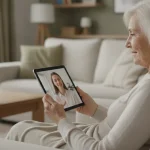
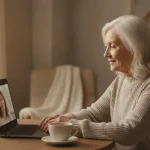
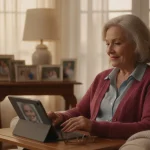
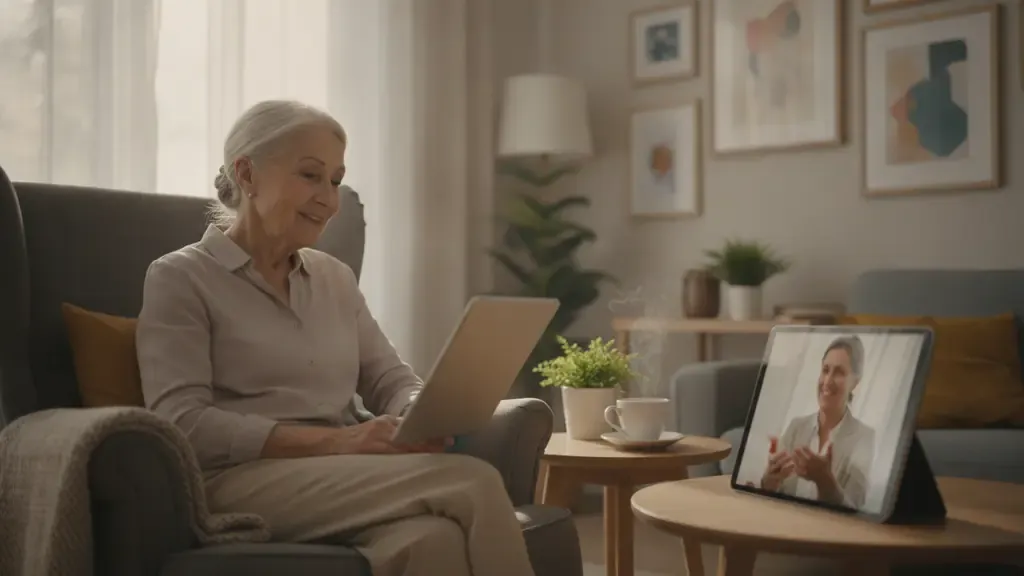
Video therapy may be a good fit for a senior who is comfortable using a tablet, smartphone, or computer and wants the additional connection of seeing the therapist. Visual contact can help some people communicate through facial expressions, gestures, or demonstrations. It may also help the therapist notice when a client is having difficulty hearing or following the conversation, although video is not required for care.
A 2022 review of video-to-home treatment for older adults describes video care as a feasible option while noting barriers such as technology access, comfort with technology, and physical or cognitive limitations. That is why the most useful question is not whether video is modern. It is whether the senior can use it without turning the appointment into a technology test. Read the review in the National Library of Medicine.
- The senior can connect to a stable internet service.
- The device has enough battery, or it can remain plugged in safely.
- The screen, camera, and volume are comfortable to use.
- The senior wants visual contact and does not feel pressured by the camera.
- A family member or caregiver can help with setup only when the senior wants that help.
- The room can be arranged so the senior can speak privately.
Learn how Blue Moon Senior Counseling’s telehealth services work
How should hearing, vision, and communication needs affect the choice?
Communication needs should guide the format from the beginning. A senior with hearing loss may need stronger volume, headphones, captions when available, or a quieter room. A senior with vision changes may find a small video screen tiring, or may prefer the visual cues of a larger tablet. Another person may communicate more comfortably by phone because the screen feels distracting. These are practical preferences, not signs that one format is universally right or wrong.
Before choosing, consider:
- Can the senior hear the therapist clearly without straining?
- Can the senior see a video screen comfortably for the session?
- Would a camera help the senior feel connected, or make conversation harder?
- Can the senior communicate needs if the audio or video becomes difficult?
- Would an accessibility device or trusted helper make either format easier?
Tell the intake specialist and therapist about communication preferences. Small adjustments, such as changing the room, using headphones, or selecting a larger screen, may improve the experience. If the client cannot participate reliably in either format, the provider can discuss what other support or evaluation may be appropriate.
What privacy and caregiver questions should families consider?
Privacy matters in both phone and video therapy. A caregiver may help a senior charge a device, adjust volume, or connect to an appointment, but the older adult should remain the primary participant in the actual therapy session. Ask the senior where they want the session to happen, whether they want anyone nearby, and what kind of assistance feels welcome. A caregiver should not assume that being present is appropriate for every conversation.
For video, consider what the camera can see and whether other devices are recording or listening. For phone sessions, avoid speakerphone in shared spaces unless the client is comfortable with who can hear. Blue Moon’s senior counseling services information explains the general counseling process, while the provider can answer questions about the specific appointment setup.
Does Medicare affect whether a senior chooses phone or video therapy?
Coverage and format are related, but they are not the same decision. Blue Moon Senior Counseling describes its counseling as a Medicare Part B covered service for eligible clients, with benefits and out-of-pocket responsibility depending on the person’s coverage and circumstances. A senior or family member should confirm eligibility and ask the intake team how the available service applies to the client’s plan. Do not assume that a general statement about telehealth guarantees the same result for every beneficiary.
The client can ask:
- Is the service available in the senior’s state?
- Does the provider accept the senior’s traditional Medicare or Medicare Advantage PPO plan?
- Is individual teletherapy available by phone, video, or both?
- What technology or privacy setup should the senior prepare?
- Who should the family contact if the format becomes difficult?
Blue Moon’s senior counseling referral form is one way to start the conversation. A phone call is another option for someone who would rather ask questions before completing a form.
What should a senior ask before selecting a therapy format?
A short conversation before the first appointment can prevent avoidable frustration. The senior does not need to master every technical detail or decide the entire course of care immediately. The goal is to learn whether the format is workable and what support is available.
- What equipment do I need? Ask about the phone, tablet, computer, internet, camera, and audio requirements.
- What happens if the connection fails? Learn whether there is a backup contact method and whom to call.
- Can I change formats later? Ask whether the care team can discuss a different format if needs or comfort change.
- How will privacy be protected? Discuss the recommended setting and what to do if another person is present.
- How can a caregiver help? Clarify whether technical help is welcome and how the senior’s choices remain central.
- How will coverage be checked? Ask which Medicare or plan details the intake team needs before care begins.
These questions turn a vague technology concern into a manageable plan. The best starting format is usually the one that makes it easiest for the senior to hear, speak, feel respected, and attend consistently.
Call Blue Moon Senior Counseling at (630) 896-7160 to discuss individual teletherapy
What are common questions about phone or video therapy for seniors?
Can a senior switch from phone therapy to video therapy?
Possibly. A senior can ask the provider whether changing formats is available and what technology or coverage requirements apply. The choice can be revisited if the client’s comfort, hearing, vision, privacy, or internet access changes.
Is phone therapy less effective than video therapy?
There is no single answer for every client. The most useful format is one the senior can access, hear, use privately, and continue. A therapist can discuss fit based on the client’s needs rather than assuming that video is always better.
Does video therapy require a computer?
Not necessarily. The provider should explain which compatible devices can be used. A senior should confirm the specific device, internet, camera, and audio requirements before the appointment.
Can a caregiver sit in during a senior’s therapy session?
A caregiver may help with setup or participate when the senior wants that involvement and the provider agrees. The senior’s preferences, consent, and privacy should guide who is present.
What if a senior cannot use either format reliably?
Tell the intake team and therapist what is making participation difficult. They can discuss whether a device adjustment, accessibility support, a different format, or another level of care is appropriate. If there is an immediate safety emergency, use emergency services rather than waiting for a routine therapy appointment.
Choosing phone or video therapy for seniors should be a practical, respectful decision. Blue Moon Senior Counseling can help a senior or family member understand the available individual teletherapy options and identify a comfortable next step.