

Retirement can bring freedom, but it can also remove familiar routines, work relationships, and a sense of purpose. When sadness, withdrawal, or loss of interest continues, families may wonder how to help. Supporting a senior through retirement depression in seniors starts with listening, noticing meaningful changes, and making professional care easier to reach.
Call Blue Moon Senior Counseling at (630) 896-7160
Why can retirement lead to depression in seniors?
Depression after retirement can develop when a major life transition changes a senior’s daily structure, identity, relationships, finances, or responsibilities. Retirement itself does not cause depression for everyone. However, the transition can expose or intensify concerns such as isolation, grief, health problems, financial stress, or uncertainty about what comes next.
Work often provides more than a paycheck. It can offer a reason to get up, regular contact with other people, opportunities to use valued skills, and a clear role in the community. Leaving that structure may feel like a loss, even when retirement was planned and wanted.
Other changes may happen at the same time. A senior may move, lose a spouse or coworker, take on a caregiving role, or manage a new medical diagnosis. These experiences can overlap with normal adjustment, anxiety, or grief. A compassionate response avoids judging the person as ungrateful or simply bored.
What signs of depression after retirement should families watch for?
Families should look for a pattern of changes that lasts, worsens, or interferes with everyday life. Possible signs include persistent sadness, emptiness, hopelessness, unusual irritability, loss of interest, fatigue, sleep or appetite changes, difficulty concentrating, and pulling away from people or activities. Only a qualified health professional can diagnose depression.
- Stopping hobbies, outings, or routines the senior previously enjoyed
- Spending much more time alone or declining nearly every invitation
- Sleeping far more or less than usual, or reporting ongoing exhaustion
- Eating much more or less, or losing interest in meals
- Expressing guilt, worthlessness, hopelessness, or being a burden
- Having trouble concentrating, deciding, or keeping up with tasks
- Showing a noticeable increase in irritability or anger
- Talking about death, not wanting to wake up, or feeling there is no reason to continue
These symptoms can also occur with medication effects, thyroid problems, pain, sleep disorders, infections, or other health conditions. A primary care clinician can help evaluate sudden or unexplained changes. For an overview of depression symptoms and treatment, see the National Institute of Mental Health depression guide.
How can you start a conversation about a senior’s mental health?
The first conversation should communicate concern without taking away the senior’s independence. Use specific observations rather than labels. For example, say, “I have noticed you have stopped your morning walks and seem exhausted. How have you been feeling?” Then allow time for an answer without immediately correcting, reassuring, or offering a solution.
- Choose a calm moment. Avoid beginning the conversation during an argument or when the senior is rushing.
- Ask open questions. Try, “What has retirement been like for you?” or “What feels hardest right now?”
- Listen for the concern underneath the words. The senior may be grieving a role, worried about money, or afraid of losing control.
- Validate the experience. You can acknowledge that a transition is difficult without agreeing that nothing can improve.
- Offer one next step. Ask whether the person would like help calling a clinician, scheduling an appointment, or taking a short walk.
- Respect choice while staying connected. A senior may not accept help during the first conversation. Keep the door open and continue checking in.
| Try saying | Avoid saying |
|---|---|
| “I am here with you, and we can look at options together.” | “You have nothing to be sad about.” |
| “Would you like me to sit with you while you call the doctor?” | “You just need to get out more.” |
| “What kind of support would feel acceptable to you?” | “Everyone has problems. You need to toughen up.” |
What practical support can help a senior day to day?
Practical support works best when it is small, predictable, and shaped around the senior’s abilities and preferences. The goal is not to fill every hour or force a cheerful attitude. It is to restore manageable structure, connection, and opportunities for choice while the family also pursues appropriate health care.
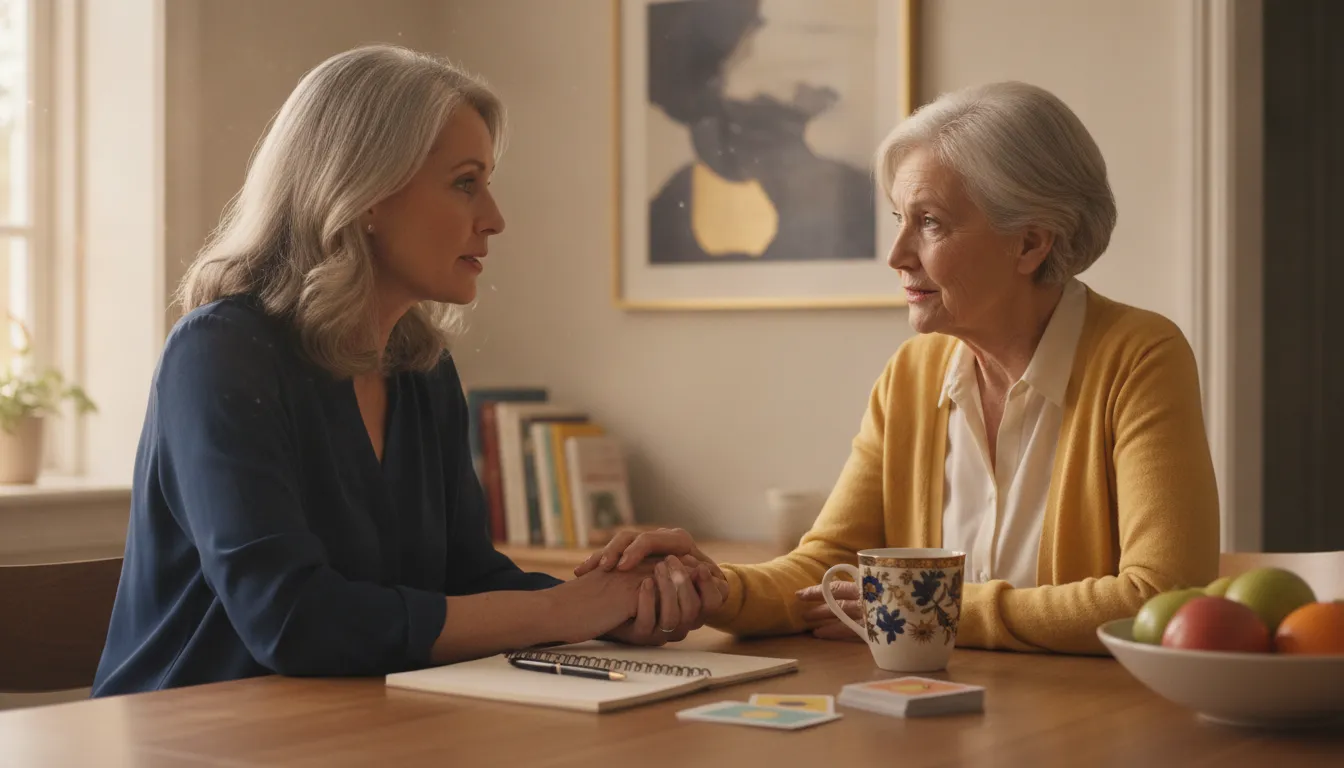
- Build a gentle routine. Set regular times for waking, meals, medications as prescribed, movement, rest, and contact with other people.
- Start with accessible activity. A short walk, sitting outside, gardening, music, or a familiar hobby may be more realistic than a full schedule.
- Make social contact specific. Replace “Let me know if you need anything” with a planned call, shared meal, or brief visit.
- Support appointments. Help organize transportation, questions, medication lists, and follow-up dates if the senior wants that assistance.
- Protect autonomy. Offer choices such as two activities or two appointment times rather than taking over every decision.
- Notice progress without pressure. Praise effort, such as getting dressed or joining a meal, instead of demanding a quick mood change.
These actions can complement treatment, but they are not a substitute for evaluation when symptoms persist or become severe. Families should also avoid changing medications, stopping treatment, or adding supplements without guidance from the senior’s health care professional.
When should a senior seek professional help?
Professional help is appropriate when symptoms last, interfere with self-care or relationships, cause significant distress, or cause changes in daily functioning. It is also reasonable to seek help early when a senior or family member is worried. A clinician can help distinguish depression from grief, adjustment difficulties, medical conditions, medication effects, or another mental health concern.
Begin with a primary care professional, a licensed mental health clinician, or a referral service that understands older-adult care. Blue Moon Senior Counseling provides counseling focused on older adults, including support for depression and life transitions through its older-adult depression counseling service. Families can share observations, but the senior should be included in decisions about care whenever possible.
Schedule a counseling referral with Blue Moon Senior Counseling
How can counseling help with depression after retirement?
Counseling gives a senior a private place to discuss the emotional meaning of retirement and develop realistic ways to respond. Therapy may address loss of identity, changes in relationships, low motivation, anxiety, grief, health-related stress, or difficulty building a new routine. Treatment goals are individualized rather than based on a single idea of what retirement should look like.
Blue Moon Senior Counseling primarily offers individual teletherapy with licensed clinical social workers for older adults. Depending on the person’s needs, a therapist may use approaches such as cognitive behavioral therapy or interpersonal therapy, adapted to the individual’s goals and life circumstances. Sessions may be available by phone or video through telehealth counseling for seniors.
A family member can make care easier to consider by offering to help with the first call, explaining that counseling is not a punishment or a sign of failure, and allowing the senior to ask questions before deciding. If the senior prefers phone sessions or needs support using video, discuss those preferences when arranging care.
Is counseling for depression after retirement covered by Medicare?
Medicare Part B covers many outpatient mental health services, including individual psychotherapy from eligible Medicare-enrolled professionals, subject to Medicare rules, deductibles, and coinsurance. Coverage depends on the provider, plan, service, and the senior’s circumstances. Review the current details on Medicare’s outpatient mental health coverage page and confirm benefits with the plan or provider.
For Blue Moon Senior Counseling, individual teletherapy for eligible seniors is offered as a Medicare Part B covered service. A family member can ask about eligibility, the available phone or video format, and what information is needed for a referral. Avoid assuming that every plan or service has identical costs.
What should a family do if a senior may be in crisis?
Take statements about suicide, self-harm, or not wanting to live seriously. Ask directly and calmly whether the senior is thinking about suicide. Asking does not create suicidal thoughts, and a clear question can help a person disclose risk. Do not leave the person alone if there is immediate danger, and do not promise to keep a life-threatening plan secret.
Call or text 988 to reach the Suicide and Crisis Lifeline, or use the 988 Lifeline website for chat and additional support. Call 911 or go to the nearest emergency department for immediate danger, an attempt, or a serious medical emergency. If the concern is urgent but not an immediate emergency, contact the senior’s clinician or primary care office and stay connected while help is arranged.
Call Blue Moon Senior Counseling at (630) 896-7160
Frequently asked questions about retirement depression in seniors
Is depression after retirement a normal part of aging?
Feeling unsettled during a major transition can be common, but persistent depression is not something a senior has to accept as normal aging. If mood or behavior changes last or interfere with daily life, encourage an evaluation by a qualified health professional.
How long does depression after retirement last?
There is no single timeline. Symptoms may improve as a senior adjusts, but ongoing or worsening symptoms deserve professional attention. Early support can help identify contributing health, medication, grief, relationship, and mental health factors.
What if my parent refuses counseling?
Do not turn the conversation into a battle. Ask what feels uncomfortable, listen for concerns about privacy or independence, and offer a low-pressure first step such as calling to ask questions. Continue supportive contact and seek urgent help if safety is at risk.
Can a family member attend a therapy session?
That depends on the senior’s preferences, the therapist’s approach, and the purpose of the session. Ask the senior and provider rather than assuming. Blue Moon Senior Counseling primarily offers individual teletherapy, with the senior’s privacy and goals guiding care.
What is the first step toward help?
Start by sharing a specific observation with the senior, asking what support would feel acceptable, and contacting a primary care clinician or qualified counseling provider. A family member can help gather questions and arrange a call while keeping the senior involved.
Supporting a senior through depression after retirement is not about fixing every feeling or recreating the person’s working life. It is about staying connected, respecting autonomy, noticing risk, and helping the senior reach appropriate care. With patient support and professional guidance, retirement can become a chapter with renewed structure, relationships, and purpose.