
Anxiety in later life can show up after bereavement, a new diagnosis, chronic pain, fear of falling, a move, medication concerns, or growing isolation. It may affect sleep, confidence, relationships, and daily routines, even when a person is unsure whether their symptoms fit a formal diagnosis.
Anxiety treatment for older adults may include an initial assessment, individual counseling, practical coping strategies, and a conversation with a qualified prescriber when medication could be relevant. The right combination depends on a person’s symptoms, health history, goals, preferences, and safety needs.
Good care begins with listening rather than assuming. A clinician can consider medical and mental-health history, current medications, living situation, support system, and the changes the older adult most wants to make. Understanding these parts of care makes it easier to compare available options and choose support that feels respectful, accessible, and collaborative.
What can make a senior afraid to leave the house?
When a senior is afraid to leave the house, the fear may be connected to several concerns at once. A recent medical diagnosis, chronic pain, or changes in mobility can make ordinary outings feel less predictable. Vision or hearing changes may reduce confidence in unfamiliar places. Someone who has stopped driving may worry about depending on others, while a person who has fallen may fear falling again.
Emotional changes can matter just as much. Grief, a forced move, loneliness, or a long period of isolation may make the outside world feel unfamiliar. Anxiety may also be part of the picture, especially when a senior worries about crowds, public spaces, symptoms, or being unable to get home quickly. These possibilities can overlap with physical limitations and practical barriers.
Schedule a counseling consultation to discuss concerns about leaving home by phone or video.
Look for the concern beneath the fear
Try to learn what feels most difficult instead of assuming the reason. Is the senior worried about pain, balance, getting lost, using the restroom, driving, crowds, or being away from a trusted person? The answer can point to a practical need, an emotional loss, or both. A calm question such as, “What feels hardest about going out?” gives the senior room to explain without feeling judged.
Being afraid to leave home does not, by itself, establish agoraphobia, anxiety, depression, or another diagnosis. A professional assessment considers the person’s history, medications, medical conditions, support system, living situation, and immediate safety concerns. The goal is to understand what has changed and what kind of support the senior wants, while preserving dignity and choice.
How should a family member start the conversation?
A calm conversation can help a senior feel respected rather than managed. Choose a quiet moment, allow plenty of time, and focus on understanding what feels difficult. Fear about leaving home may involve health, mobility, grief, confidence, or another concern that is not obvious at first. Your role is to listen and work alongside the senior, not decide what the fear means.
- Begin with an observation and validation. Describe what you have noticed without criticism. Let the senior know that the feeling is worth discussing. You might say, “I have noticed that leaving home has felt harder lately. And I can see that this is upsetting.” Validation does not mean agreeing that every feared outcome will happen. It means acknowledging that the experience feels real and difficult.
- Ask permission before offering help. A senior may be more willing to talk when they retain control over the conversation. Try, “Would it be okay if we talked about what makes going out feel uncomfortable?” If the answer is no. Respect that boundary and ask when might be a better time. Repeated pressure can make a person withdraw further.
- Use open questions and listen for practical barriers. Ask. “What part of leaving feels hardest?” or “What would help you feel a little safer?” Follow the senior’s answer instead of quickly explaining why the concern is unreasonable. Fear may connect with pain, fear of falling, changes in vision or hearing, loss of driving, grief, or worry about being unable to return home. Do not diagnose from avoidance alone.
- Offer choices instead of arguments. Avoid saying, “You have to get out more,” or debating whether the fear is logical. Ask whether the senior would prefer a short trip, a familiar companion, a different time of day, or another manageable option. A choice such as “Would you rather talk today or tomorrow?” can preserve dignity while keeping communication open.
- Discuss support without taking over. A family member can offer to help arrange a conversation with a qualified counselor, while allowing the senior to decide what information is shared. Blue Moon provides individual teletherapy by phone or video, so an initial counseling conversation does not require travel. Family participation in an assessment or care should occur with the senior’s consent.
Call (630) 896-7160 to discuss senior counseling options.
What practical changes can make leaving home feel safer?
Small adjustments can reduce the parts of an outing that feel overwhelming. The goal is not to force a senior out of the house. It is to understand which part feels unsafe and work together on an option that preserves choice and dignity.
Timing may matter. A quieter time of day can mean fewer people, less traffic, shorter lines, or better access to seating. Before leaving, check the weather, traffic, parking, and transportation schedule. If driving no longer feels comfortable, options could include a trusted relative, paratransit, a rideshare with assistance, or another community resource.
Planning rest can make an outing more manageable. A senior might choose a destination with nearby parking, accessible entrances, elevators, and places to sit. A short trip to a familiar location may feel more realistic than a long list of errands. Plan one necessary task. Give permission to return home if the senior becomes tired or distressed.
Familiarity often lowers uncertainty. Review the route in advance, visit the location virtually, or take a brief drive without getting out. A companion might accompany the senior while allowing them to decide the pace, where to wait, and when to leave. Helpful language sounds collaborative: “Would you like me to come with you?” or “Which part of this plan would feel easiest?”
| Question | Purpose |
|---|---|
| What part feels unsafe? | Identify the barrier instead of guessing. |
| What would make this easier? | Invite the senior to choose a support. |
| When would you feel comfortable trying? | Respect energy and routine. |
| How will you signal that you want to stop? | Create a pause and return plan. |
Concrete concerns deserve attention. If fear involves balance, pain, vision, hearing, medication effects, or a mobility aid, discuss those concerns with an appropriate medical or rehabilitation professional. Addressing physical safety does not establish a mental-health diagnosis.
How can families support gradual progress without pressure?
Progress does not have to mean completing a long outing or suddenly feeling comfortable in every public place. For a senior who is afraid to leave the house, progress may begin with choosing when to open the door. Standing on the porch for a minute, or discussing one manageable destination. The goal is not to turn each attempt into a test. It is to help the older adult feel heard, involved, and able to make decisions about what happens next.
Ask what feels possible today, rather than announcing what the person should do. Offer two realistic choices, such as sitting outside or taking a short ride, and accept “not today” without criticism. A calm response might be, “Thank you for telling me. Would you like to talk about what made that feel too difficult?” This keeps the conversation open and may reveal a concrete concern. Such as fatigue, pain, fear of falling, uncertainty about the bathroom, or worry about becoming overwhelmed.
Celebrate effort, not just the outcome
Notice the steps that required courage. Preparing clothes, calling a doctor’s office, walking to the mailbox, or agreeing to ride around the block may all represent meaningful effort. Avoid comparing the senior with siblings, neighbors, or their younger self. Praise specifically and without exaggeration: “You told me what you needed. And we made a plan together.” Encouragement should communicate respect, not create a new obligation to repeat the step tomorrow.
Families can also agree on a pause plan before trying something new. Decide how the senior can signal that they need to stop, where they can sit, and how everyone will get home. A companion should remain supportive without repeatedly asking whether the person is anxious or insisting that they stay longer. If the plan becomes too difficult, ending it safely is information for the next conversation, not a failure.
Keep the focus on autonomy and support
This approach is different from forcing exposure exercises or treating every outing as proof that fear is improving. It is also different from the site’s articles about relaxation techniques or shrinking comfort zones, which address related topics from other angles. Here, the focus is the family’s role: listening, reducing pressure, and helping the senior identify a personally meaningful next step. If the senior is hesitant about counseling itself, families can review guidance on how to help a senior accept support while preserving privacy and choice.
Family involvement should follow the senior’s consent. Gradual progress is more sustainable when goals reflect the person’s values, such as attending a medical appointment. Seeing a friend, or feeling more independent at home, rather than meeting someone else’s timeline.
When should a senior receive professional support?
Professional support may be useful when fear of leaving home continues, becomes more intense, or begins to interfere with ordinary care and connection. Pay attention if a senior repeatedly avoids medical appointments, pharmacy visits, meals, religious services, or other activities that matter to them. Worsening isolation, ongoing distress, noticeable changes in sleep, appetite, or mood, and repeated concerns about personal safety are also reasons to seek guidance. A family may not be able to tell from avoidance alone whether the concern involves anxiety, grief, a health change, medication effects, mobility concerns, or something else.
An assessment is not a diagnosis based on one behavior. It is an opportunity to understand the whole situation. A qualified clinician may ask about the senior’s history, current concerns, medications, medical conditions, mental health history, previous counseling, social supports, living situation, and immediate safety. These questions can help distinguish emotional distress from practical barriers and identify what kind of support fits the senior’s priorities. The senior should be included in decisions, and family members or caregivers may participate when appropriate and with the senior’s consent.
It can help to frame counseling as a conversation about making daily life feel more manageable, rather than as proof that something is wrong. Treatment goals should be developed with the client and reflect their values. For example, the first goal might be feeling more comfortable discussing an upcoming appointment, reconnecting with one trusted person, or understanding what makes a particular outing feel unsafe. Families looking for non-diagnostic information can also learn about anxiety support for older adults without assuming that anxiety explains every situation.
Blue Moon Senior Counseling provides individual teletherapy by phone or video, so an initial conversation does not require the senior to travel to an office. Family-initiated referrals are possible, while intake continues to protect the senior’s autonomy and confidentiality. If there is immediate danger, a medical emergency, or concern that someone may harm themselves or another person. Call 911 or 988 rather than waiting for a routine counseling appointment.
Call (630) 896-7160 to discuss counseling support for a senior.
Can counseling help if leaving home feels impossible?
Yes. Individual teletherapy by phone or video can let a senior begin talking without making travel the first hurdle. When someone is a senior afraid to leave the house, the fear may relate to grief, pain, health changes, fear of falling, isolation, or another concern. One behavior alone does not establish a diagnosis.
A family member may begin the referral process when the senior is overwhelmed. That does not mean the family takes over care. During intake, the older adult can ask questions and decide what they are comfortable discussing. Permission should be given before family members participate.
What happens during the first conversation?
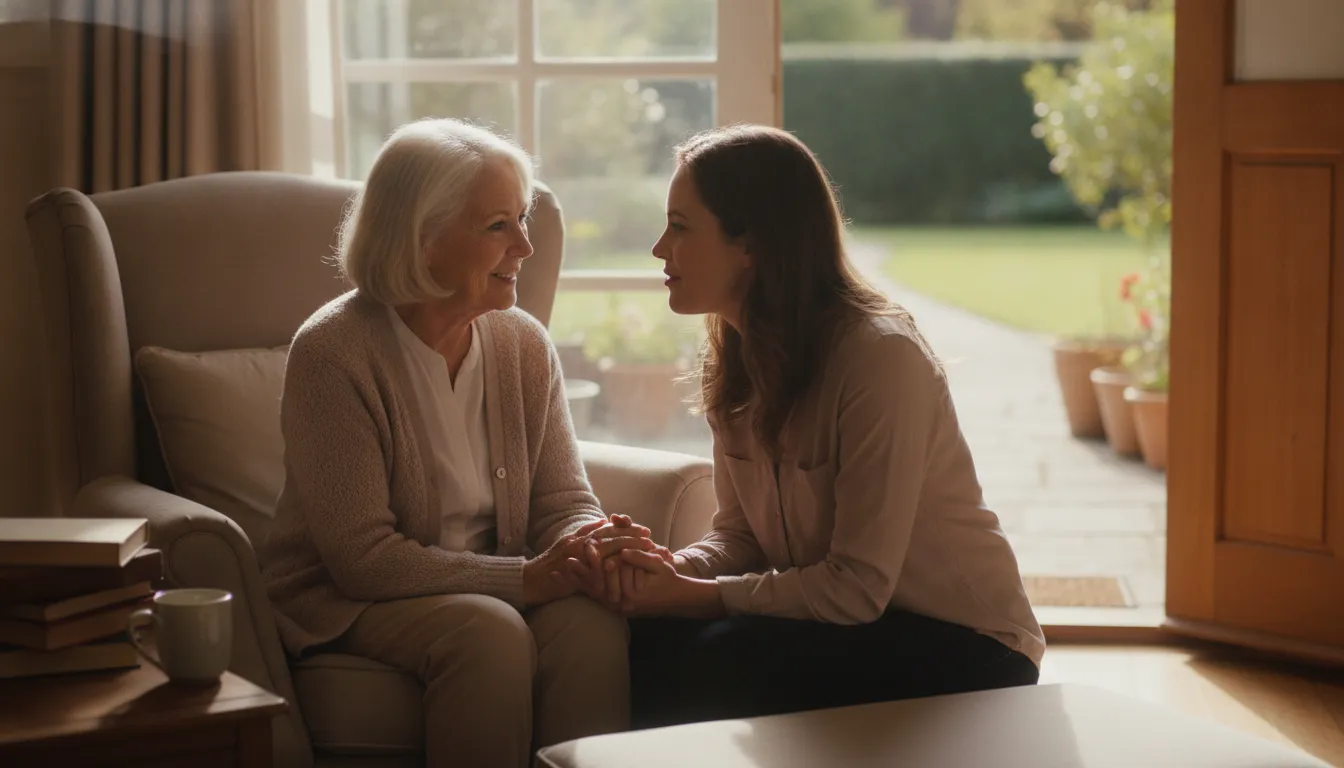
An initial assessment is not a test. The counselor may ask about when the concern began, medical diagnoses, medications, mental-health history, daily routines, living situation, support system, and safety. These questions help distinguish practical barriers from emotional distress.
The counselor and client can create goals together. Goals might involve discussing an outing, reconnecting with a trusted person, managing worry about a health change, or identifying support for a transition. Progress does not have to mean traveling somewhere alone. It can begin with a phone session or a carefully chosen action.
Offering online therapy from home may make the first step practical. Blue Moon describes individual teletherapy by phone or video as a Medicare Part B covered service. Coverage, eligibility, location, technology needs, and out-of-pocket costs depend on the person’s circumstances and plan.
Schedule a counseling consultation to discuss supportive next steps.
Frequently Asked Questions
Should I force my parent to leave the house?
No. Pressure can increase fear and damage trust. Ask what feels unsafe, acknowledge the concern, and offer choices. Support should preserve the senior’s dignity and decision-making.
How can I tell whether the fear is emotional or practical?
Ask about falls, pain, mobility, vision, hearing, driving, medication concerns, grief, and loneliness. A senior may be responding to more than one issue. Avoid diagnosing from avoidance alone. Involve a medical or mental-health professional when the concern persists or affects daily life.
Can counseling happen without traveling to an office?
Yes. Blue Moon provides individual teletherapy by phone or video. An initial conversation can happen from home, where counseling can explore concerns, safety, supports, and priorities.
Can a family member contact a counselor first?
Yes. A family member may initiate a referral and describe concerns. Ongoing family involvement in intake or care should occur with the senior’s consent.
Schedule a Counseling Consultation
If leaving home feels overwhelming, a supportive conversation can help your family consider respectful next steps. Blue Moon Senior Counseling offers individual teletherapy by phone or video. To schedule a counseling consultation, use the senior counseling referral form.
This guide is for education and does not replace medical or emergency care.